

This pack gives you a large number of history trivia questions with answers built in, split into easy, medium, hard, and expert tiers so you can build a round in minutes instead of hunting facts across ten browser tabs. The categorized approach works because mixed-difficulty rounds keep both casual players and history buffs engaged at the same table.
Here's what's inside:
- U.S. history — from founding documents to civil rights milestones
- World history — spanning Africa, Asia, Latin America, and Oceania, not just Europe
- Ancient civilizations — Egypt, Mesopotamia, Rome, China, Mesoamerica
- Medieval, Renaissance & exploration — from the Magna Carta to Vasco da Gama
- 20th-century wars — World War I through the Cold War
- Leaders, inventions & culture — science, art, and social change
- Black history & underrepresented histories — with context, not tokenism
- An expert round — for the players who actually want to lose
Print it, copy it into a slideshow, or run it live as an interactive quiz on Statiso's trivia platform with real-time scoring.
Key Takeaways
A well-run history quiz depends on difficulty labeling, regional balance, and format variety more than raw question count.
| Point | Details |
|---|---|
| Use difficulty tiers | Label every question Easy, Medium, Hard, or Expert so mixed-age groups all stay engaged. |
| Mix formats by setting | Use multiple choice for large groups, true/false for speed, open-ended for experts. |
| Go beyond Eurocentric picks | Include Africa, Asia, Latin America, and Oceania in every round to broaden appeal. |
| Add context to sensitive topics | Pair Black history and conflict questions with a line of context, not just a score. |
| Run it live on Statiso | Use Statiso's quiz platform for real-time scoring, leaderboards, and printable exports. |
Table of Contents
- How to Run History Trivia Questions Successfully
- U.S. History Trivia Questions and Answers
- World History Trivia Questions Across Regions
- Ancient History Trivia Questions and Answers
- Medieval, Renaissance and Age of Exploration Trivia
- Wars and 20th-Century Conflicts Trivia
- Leaders, Inventions and Culture Trivia Questions
- Black History and Underrepresented Global Histories
- Extra-Hard History Trivia for Expert Players
- Why Inclusive Question Design Matters for a Fun History Quiz
- Sources
How to Run History Trivia Questions Successfully
The fastest way to run a solid round is ten questions, mixed difficulty, capped at 30 seconds each. That formula works in a classroom, a bar, or a Zoom call, and it keeps the pace tight enough that nobody checks their phone.
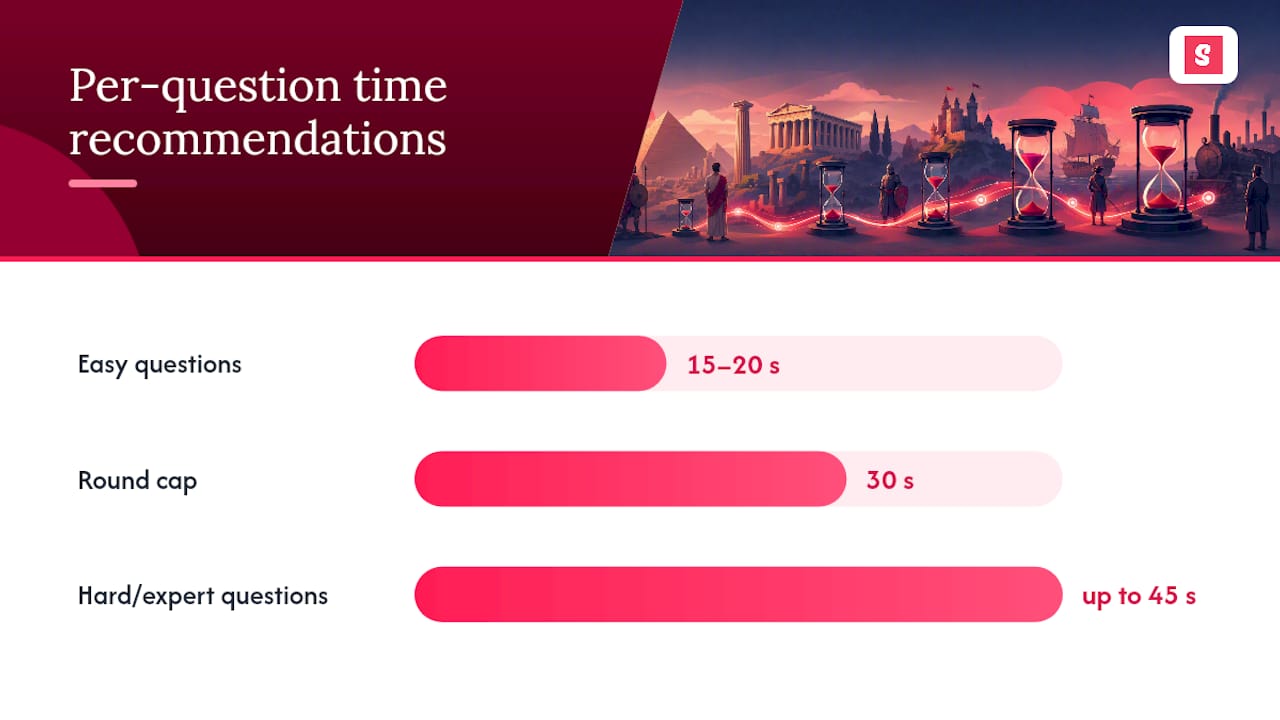
Match the format to your room. Multiple choice works best for large or nervous groups because nobody has to risk a wrong answer out loud. True/false is the fastest format when you're racing the clock. Open-ended, rapid-fire questions reward the players who actually know their stuff and work well for a final "sudden death" round.
A few adjustments matter depending on who's in the room:
- Kids and mixed-age families: lean easy and medium, skip anything requiring date precision.
- Pub quiz or adult trivia night: mix in hard and expert questions, and offer bonus points for exact years.
- Classroom settings: pair questions with a map, timeline, or short video clip to reinforce the lesson.
- Online/remote quizzes: use a shared screen or a platform like Statiso so players can answer without shouting over each other.
Give easy questions 15 to 20 seconds and hard or expert questions up to 45. Award one point per correct answer and a bonus point for extra detail (exact year, full name, or a related fact).
Pro Tip: Weave in a question tied to a recent movie, documentary, or novel about the period you're covering. Media-linked questions noticeably increase engagement among younger players, because they've got a visual anchor for a fact they'd otherwise forget.
U.S. History Trivia Questions and Answers
This round works especially well around July 4th, Presidents Day, or in a civics classroom, since it moves from founding documents through 20th-century milestones.
- (Easy) In what year was the Declaration of Independence signed? Answer: The year it was signed.
- (Easy) Who was the first president of the United States? Answer: George Washington.
- (Easy) What event triggered the U.S. entry into World War II? Answer: The attack on Pearl Harbor.
- (Easy) Which document begins with "We the People"? Answer: The U.S. Constitution.
- (Medium) Who wrote most of the Declaration of Independence? Answer: Thomas Jefferson.
- (Medium) What was the name of the ship that brought the Pilgrims to America in 1620? Answer: The Mayflower.
- (Medium) Which amendment abolished slavery? Answer: The 13th Amendment.
- (Medium) Who delivered the Gettysburg Address? Answer: Abraham Lincoln.
- (Hard) What war ended with the Treaty of Ghent? Answer: The War of 1812.
- (Hard) Which president served four terms in office? Answer: Franklin D. Roosevelt.
- (Hard) What Supreme Court case established "separate but equal"? Answer: Plessy v. Ferguson (1896).
- (Hard) In what year did women gain the right to vote nationally? Answer: The year women gained the right to vote nationally.
- (Expert) Which act, passed in 1965, banned literacy tests for voting? Answer: The Voting Rights Act.
- (Expert) What compromise admitted Missouri as a slave state and Maine as a free state? Answer: The Missouri Compromise of 1820.
Turning question 6 into multiple choice is simple: "Was it the Mayflower, the Santa Maria, or the Constitution?" Question 10 works the same way: give three presidents and ask which one served four terms.
Pro Tip: If your group includes younger players, keep the founding-era questions easy and save constitutional amendments for the medium tier. Dates confuse kids more than names do.
World History Trivia Questions Across Regions
This set is built for mixed, international groups. It pulls from Africa, Asia, Latin America, and Oceania alongside the more familiar European material, which matters since content that skips non-Western history reads as narrow to a global audience.
- (Easy) What ancient wonder is located in Giza, Egypt? Answer: The Great Pyramid.
- (Easy) Which wall, built over centuries, stretches thousands of miles across northern China? Answer: The Great Wall of China.
- (Easy) What empire was ruled by Genghis Khan? Answer: The Mongol Empire.
- (Medium) Which South American civilization built the mountain city of Machu Picchu? Answer: The Inca.
- (Medium) When did India gain independence from British rule? Answer: The year India gained independence.
- (Medium) Which African kingdom controlled trans-Saharan gold and salt trade routes in the 14th century? Answer: The Mali Empire.
- (Medium) Who was the first woman to lead a country as prime minister, taking office in Sri Lanka in 1960? Answer: Sirimavo Bandaranaike.
- (Hard) What treaty ended World War I and imposed harsh terms on Germany? Answer: The Treaty of Versailles.
- (Hard) Which Aztec ruler met Hernán Cortés in 1519? Answer: Moctezuma II.
- (Hard) What was the name of the trade network linking China to the Mediterranean? Answer: The Silk Road.
- (Hard) Which Pacific navigators settled islands across thousands of miles using stars and swells, without written maps? Answer: Polynesian voyagers.
- (Expert) What conference divided African territory among European powers without African representation? Answer: The Berlin Conference.
- (Expert) Which Japanese era, beginning in 1868, ended feudal rule and rapidly industrialized the country? Answer: The Meiji Restoration.
- (Expert) What was the capital of the Khmer Empire, now a UNESCO site in Cambodia? Answer: Angkor.
Turn the Machu Picchu question into a picture round by showing an image of the terraced ruins and asking players to name the site and civilization. It's a strong visual anchor if you're running a screen-based quiz.
Ancient History Trivia Questions and Answers
"Ancient" here covers Mesopotamia, Egypt, China, Mesoamerica, Greece, and Rome. This tier leans on high-recognition names and inventions that most players have encountered somewhere, even if they can't place the details.
- (Easy) Which river was central to ancient Egyptian civilization? Answer: The Nile.
- (Easy) How many wonders were traditionally listed in the ancient world? Answer: Seven.
- (Easy) Which Roman leader was assassinated on the Ides of March? Answer: Julius Caesar.
- (Medium) What early writing system did the Sumerians develop? Answer: Cuneiform.
- (Medium) Which Greek city state is credited with inventing democracy? Answer: Athens.
- (Medium) Who built the first unified Chinese empire, standardizing weights and writing? Answer: Qin Shi Huang.
- (Medium) What ancient civilization is credited with inventing the concept of zero as a number? Answer: Ancient India (Indian mathematicians).
- (Hard) Which Egyptian queen ruled as pharaoh and is known for her elaborate temple at Deir el-Bahari? Answer: Hatshepsut.
- (Hard) What Mesoamerican civilization developed one of the earliest known writing systems in the Americas? Answer: The Maya.
- (Hard) Which Roman engineering achievement supplied cities with water across long distances? Answer: Aqueducts.
- (Expert) What was the name of the code of laws issued by the Babylonian king Hammurabi around 1754 BC? Answer: The Code of Hammurabi.
- (Expert) Which ancient library, destroyed over centuries, was one of the largest repositories of knowledge in the classical world? Answer: The Library of Alexandria.
For classroom use, pair the Qin Shi Huang or Hatshepsut questions with a timeline showing overlapping empires. Students consistently underestimate how much ancient Egypt, Mesopotamia, and China overlapped chronologically.
Medieval, Renaissance and Age of Exploration Trivia
This round suits high school, AP-level students, or adults who like their trivia a little denser. It moves from medieval institutions through Renaissance ideas and into the age of global exploration.
- (Easy) What 1215 document limited the power of English kings? Answer: The Magna Carta.
- (Easy) Which Italian artist painted the Mona Lisa? Answer: Leonardo da Vinci.
- (Easy) Who is credited with inventing the movable-type printing press in Europe around 1440? Answer: Johannes Gutenberg.
- (Medium) Which Portuguese explorer found a sea route to India in 1498? Answer: Vasco da Gama.
- (Medium) What plague killed an estimated third of Europe's population in the 14th century? Answer: The Black Death.
- (Medium) Which Ottoman sultan captured Constantinople in 1453? Answer: Mehmed II.
- (Medium) Who painted the ceiling of the Sistine Chapel? Answer: Michelangelo.
- (Hard) What 1492 event, aside from Columbus's voyage, marked the end of Muslim rule in Spain? Answer: The fall of Granada.
- (Hard) Which Chinese admiral led massive naval expeditions across the Indian Ocean in the early 1400s? Answer: Zheng He.
- (Hard) What treaty divided newly claimed lands between Spain and Portugal in 1494? Answer: The Treaty of Tordesillas.
- (Expert) Which philosophical movement, centered on humanism, originated in 14th-century Florence? Answer: The Renaissance humanist movement.
- (Expert) What English king's break with the Catholic Church led to the founding of the Church of England? Answer: Henry VIII.
For a quick variation, turn the da Vinci or Michelangelo questions into a visual round: show a cropped painting and ask players to name the artist and era.
Wars and 20th-Century Conflicts Trivia
A few questions here touch on genocide and atrocity, so consider flagging the round with a brief content note or offering players the option to skip a question without penalty.
- (Easy) When did World War II end? Answer: The year World War II ended.
- (Easy) What event started World War I? Answer: The assassination of Archduke Franz Ferdinand.
- (Easy) Which wall symbolized the Cold War's divide and was later torn down? Answer: The Berlin Wall.
- (Medium) What was the code name for the Allied invasion of Normandy? Answer: Operation Overlord.
- (Medium) Which two cities were hit by atomic bombs in 1945? Answer: Hiroshima and Nagasaki.
- (Medium) What conflict divided Korea along the 38th parallel? Answer: The Korean War.
- (Hard) What treaty system of alliances is often cited as a cause of World War I's rapid escalation? Answer: The interlocking alliance system between major European powers.
- (Hard) Which standoff brought the U.S. and Soviet Union to the brink of nuclear war? Answer: The Cuban Missile Crisis.
- (Hard) What technological development gave Britain a critical edge during the Battle of Britain? Answer: Radar.
- (Expert) What agreement allowed Germany to annex part of Czechoslovakia in an attempt to avoid war? Answer: The Munich Agreement.
- (Expert) Which battle is widely considered the turning point of the Eastern Front in World War II? Answer: The Battle of Stalingrad.
- (Expert) What was the name of the Soviet policy of restructuring under Mikhail Gorbachev? Answer: Perestroika.
Leaders, Inventions and Culture Trivia Questions
This round celebrates the people and breakthroughs that reshaped how we live, from the lab to the concert hall.
- (Easy) Who is credited with inventing the telephone in 1876? Answer: Alexander Graham Bell.
- (Easy) Which physicist developed the theory of relativity? Answer: Albert Einstein.
- (Medium) Who painted "Starry Night"? Answer: Vincent van Gogh.
- (Medium) Which scientist's work on penicillin led to the first widely used antibiotic? Answer: Alexander Fleming.
- (Medium) Who composed the Ninth Symphony while nearly completely deaf? Answer: Ludwig van Beethoven.
- (Hard) Which chemist is credited with developing the periodic table of elements? Answer: Dmitri Mendeleev.
- (Hard) Who was the first person to fly solo across the Atlantic Ocean? Answer: Charles Lindbergh.
- (Hard) Which suffragist led the U.S. movement that won women the right to vote? Answer: Susan B. Anthony (among several key leaders).
- (Expert) Who developed the smallpox vaccine, the first successful vaccine, in 1796? Answer: Edward Jenner.
For the art and music questions, play a 15-second audio clip or show the painting instead of just reading the question aloud. It turns a knowledge check into something closer to a shared experience.
Black History and Underrepresented Global Histories
These questions come with context on purpose. A name or date without background risks becoming trivia for trivia's sake, so use each entry as a jumping-off point for a short discussion, not just a scoring opportunity.
- (Easy) Who is known for refusing to give up her bus seat in Montgomery, Alabama, in 1955? Answer: Rosa Parks.
- (Easy) What movement, led in part by Martin Luther King Jr., fought for racial equality in the U.S. in the 1950s and 60s? Answer: The Civil Rights Movement.
- (Medium) Which West African empire was renowned for the wealth of its ruler Mansa Musa? Answer: The Mali Empire.
- (Medium) Who became the first Black president of South Africa in 1994? Answer: Nelson Mandela.
- (Medium) What was the Harlem Renaissance? Answer: A flourishing of Black art, literature, and music in 1920s New York.
- (Hard) Which formerly enslaved man became a leading abolitionist, orator, and author in the 19th century? Answer: Frederick Douglass.
- (Hard) What 1921 event destroyed a prosperous Black district known as "Black Wall Street"? Answer: The Tulsa Race Massacre.
- (Hard) Who was the first Black woman to travel to space, in 1992? Answer: Mae Jemison.
- (Expert) Which Haitian revolution leader helped establish the first Black-led republic in 1804? Answer: Jean-Jacques Dessalines (following Toussaint Louverture's earlier leadership).
Pro Tip: If you're running this round in a classroom, pair each question with one line of context (why it matters, not just what happened) rather than moving straight to the next fact.
Extra-Hard History Trivia for Expert Players
This round is built for history majors, competitive quiz veterans, and anyone who groans "too easy" at everything above. Precision counts here: award bonus points for exact years or full names.
- What year did the Treaty of Westphalia end the Thirty Years' War? Answer: 1648.
- Which Byzantine emperor codified Roman law into the Corpus Juris Civilis? Answer: Justinian I.
- What was the name of the failed 1905 Russian uprising that preceded the 1917 revolution? Answer: The Revolution of 1905.
- Which dynasty ruled China during the Opium Wars of the mid-1800s? Answer: The Qing Dynasty.
- What 1929 event triggered the global Great Depression? Answer: The Wall Street Crash.
- Who was the last Mughal emperor of India, exiled after the 1857 rebellion? Answer: Bahadur Shah II.
- Which African kingdom resisted Italian colonization at the Battle of Adwa in 1896? Answer: Ethiopia.
- What 1846 to 1848 conflict resulted in Mexico ceding roughly half its territory to the U.S.? Answer: The Mexican-American War.
- Which secret 1916 agreement divided Ottoman territory between Britain and France? Answer: The Sykes-Picot Agreement.
- What was the name of the 1968 Vietnam War offensive that shifted U.S. public opinion? Answer: The Tet Offensive.
- Who led the Haitian Revolution before being captured by French forces in 1802? Answer: Toussaint Louverture.
- What 1815 battle permanently ended Napoleon's rule? Answer: The Battle of Waterloo.
Pro Tip: Give a bonus point for exact-year precision on questions like the Wall Street Crash or Waterloo. It rewards players who studied dates, not just the general story.
For anyone who wants to verify an answer or dig deeper, the National Archives' primary source collection is the most reliable place to check original documents behind U.S. history questions.
Why Inclusive Question Design Matters for a Fun History Quiz
Trivia packs that lean too heavily on European and American history end up feeling narrow to a global audience, and broadening the geographic spread of questions makes rounds more engaging for mixed groups. It's also just more interesting: the Mali Empire's gold trade or Polynesian navigation without instruments are genuinely wilder stories than half the material in a standard Eurocentric quiz.
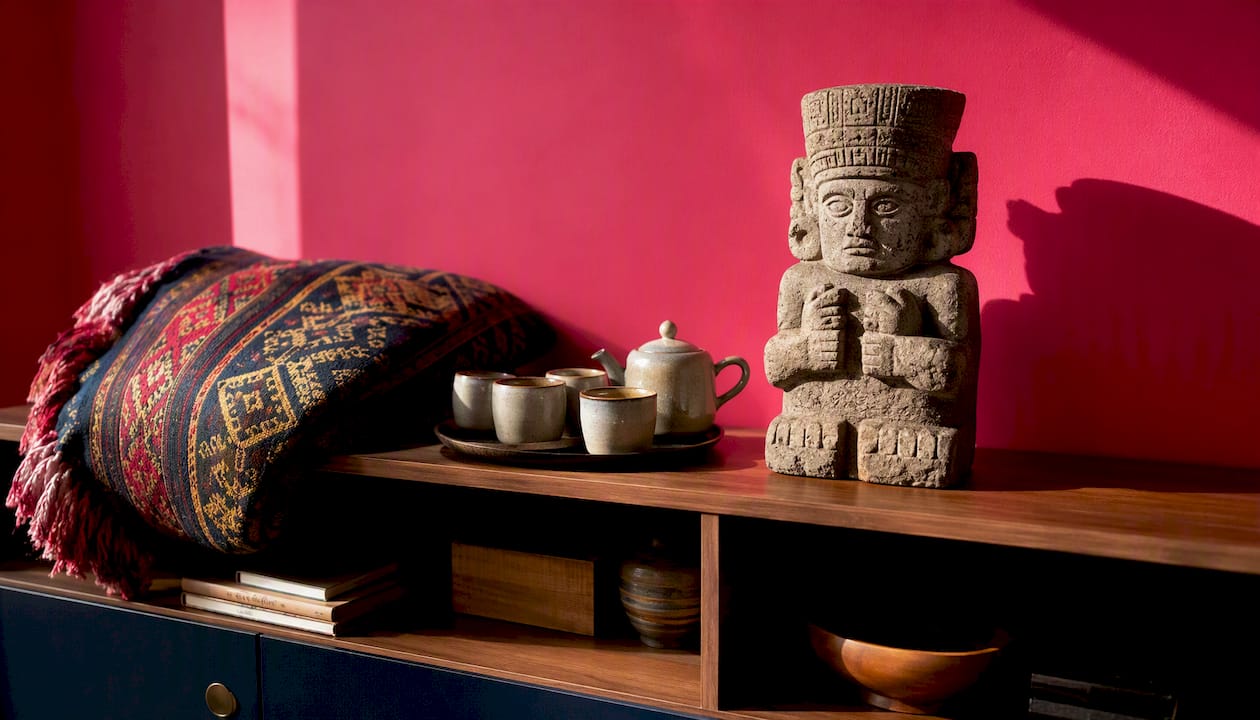
Labeling difficulty transparently isn't a nicety either. Sorting questions into easy, medium, hard, and expert tiers is one of the clearest ways to keep a mixed-age or mixed-experience group engaged, instead of losing half the room on question three.
A few rules worth following when you build your own rounds:
- Include at least two or three non-Western questions per ten-question round.
- Label difficulty on every question, not just the hard ones.
- Avoid obscure administrative trivia (obscure treaty clauses, minor officials) unless you give context first.
- Rotate categories so no single region or era dominates a session.
Pro Tip: Tie a question to a film, novel, or documentary whenever you can. Media references consistently help younger players connect with unfamiliar events, which makes the whole round feel less like a test and more like a conversation.
A Quick Note From the Team Behind This Pack
We built and cross-checked this history trivia pack from established reference sources so hosts and teachers can trust the answers. Compiled and reviewed for accuracy, 2026.
Run These Questions as a Live Quiz
Printing this pack works fine for a classroom or living room, but if you want scoring, timers, and a leaderboard done for you, Statiso's trivia quizzes handle all three automatically.
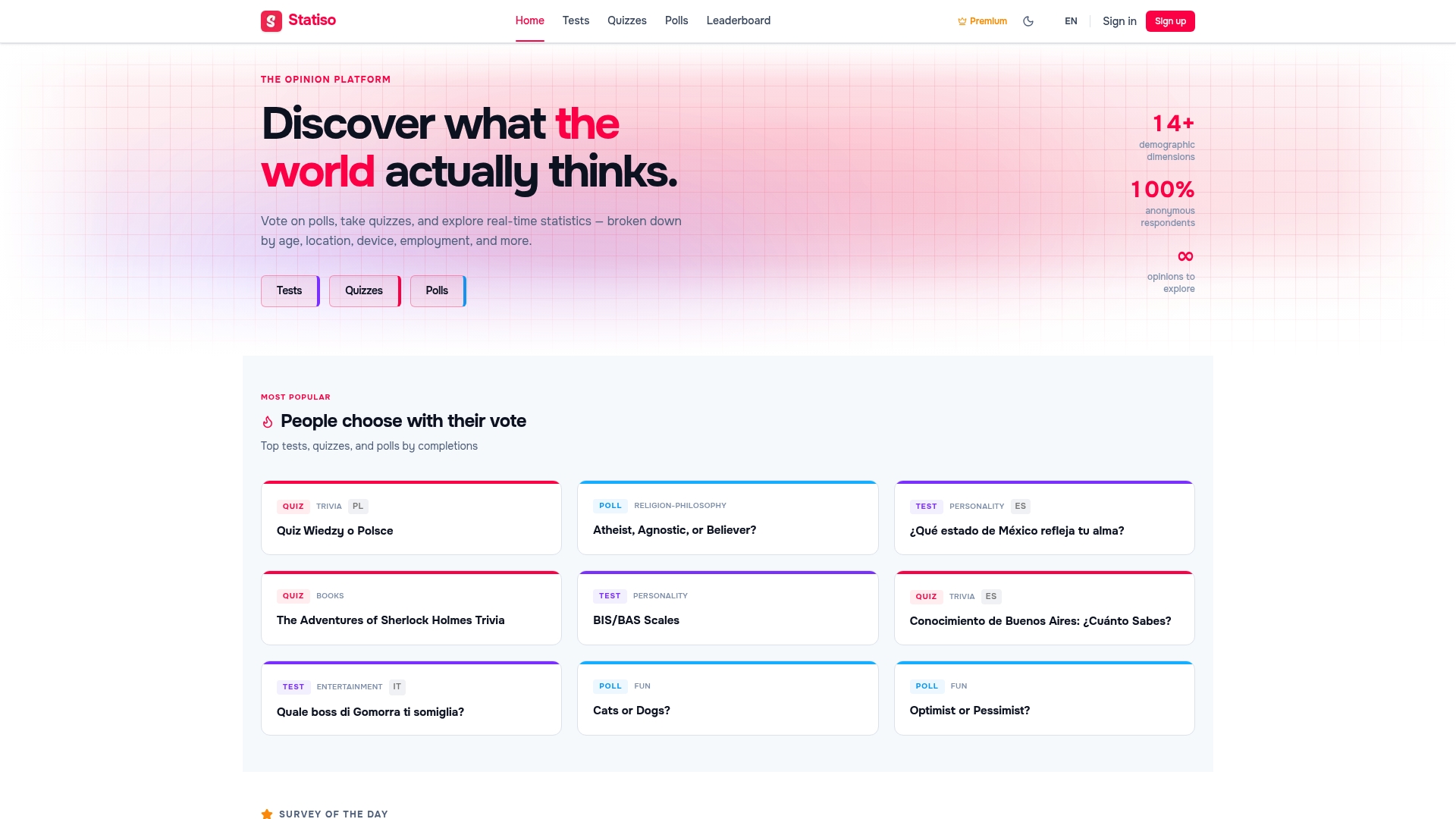
Statiso shows you how your answers stack up against players by age group and location in real time, then lets you export the results if you want a printable record for later. It also runs live polls alongside quizzes if you want to gauge opinion on a historical debate, not just test recall. Head to Statiso, paste in a round from this pack, and run your first live quiz in under five minutes.
Sources
- History trivia questions
- 100 history trivia questions to test your knowledge of the past | Jotform Blog
- Primary sources for education | National Archives
Use these for expert-round citation checks and further reading.