
This is a copy-paste-ready bank of general knowledge quiz questions and answers, organized by difficulty and by category, so you can build a round in minutes instead of hunting across ten browser tabs. Jump to General Knowledge Questions by Difficulty below, or skip straight to a themed pack: Geography, History, Science, Pop Culture, Sports, Movies & TV, Food & Drink, Animals, Technology, or Arts & Literature.
Retrieval practice, the act of recalling facts rather than just reading them, is one of the most reliable ways to lock in new knowledge, according to research from Roediger and Karpicke. That is exactly what a quiz does. Trivia formats like this one are popular for a reason. Sites like Trivio recommend short daily rounds of 10 questions to build knowledge steadily, and broad listicles like BuzzFeed's 475-question set show just how much people enjoy testing themselves against a big, varied bank.
- Easy questions for warm-ups and mixed-age groups
- Medium questions for the main event
- Hard questions for a competitive finale
- Categories: Geography, History, Science, Pop Culture, Sports, Movies & TV, Food & Drink, Animals, Technology, Arts & Literature
Key Takeaways
A well-built general knowledge quiz pairs a large, difficulty-tiered question bank with tight pacing, clear scoring rules, and a quick fact-check pass before going live.
| Point | Details |
|---|---|
| Use tiered difficulty | Mix Easy, Medium, and Hard questions in each round, roughly 4-4-2, to keep casual and serious players engaged. |
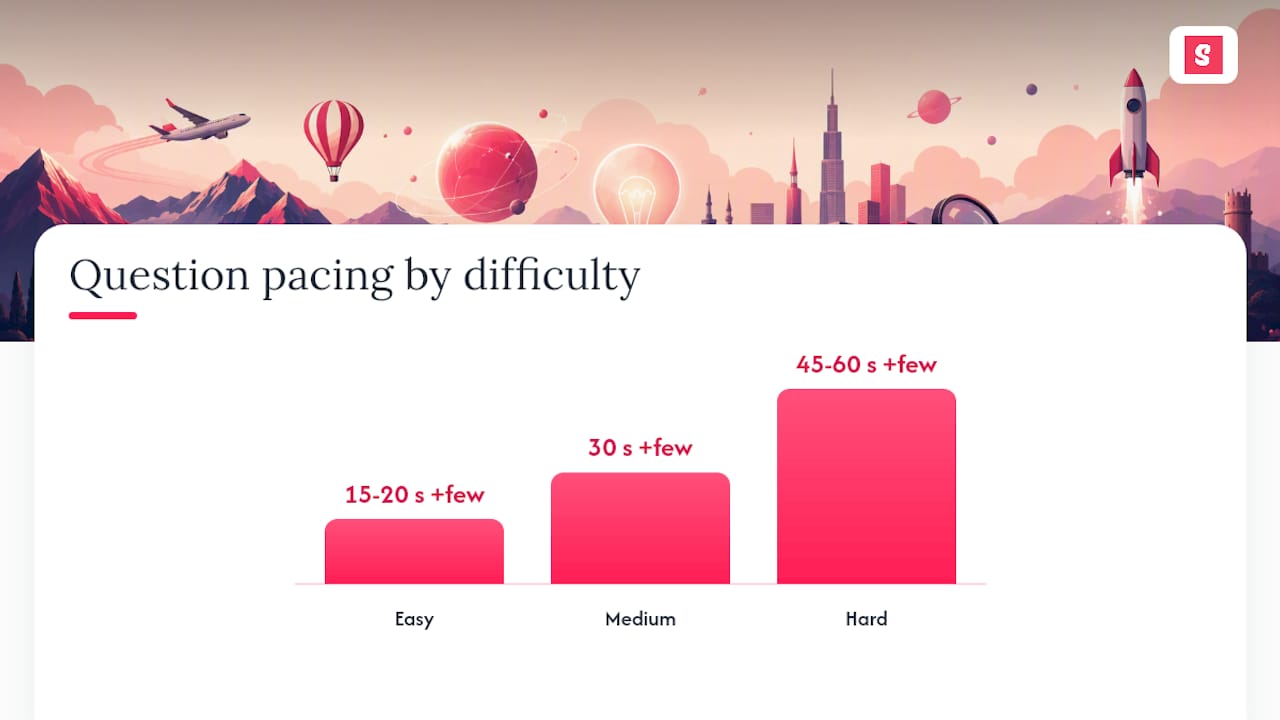
| Time questions by difficulty | Give 15-20 seconds for Easy, 30 seconds for Medium, and 45-60 seconds for Hard questions. |
| Vary question formats | Alternate open-ended, multiple-choice, and true-or-false questions to break up the rhythm and widen engagement. |
| Recheck time-sensitive facts | Verify sports records, office holders, and recent award winners in the hour before a live quiz. |
| Host live with Statiso | Use Statiso's quiz tools to run prepared rounds with real-time, segmented scoring instead of manual tallying. |
Table of Contents
- How to Build and Host a General Knowledge Quiz
- General Knowledge Questions by Difficulty
- Themed Question Packs by Category
- How These Questions Were Checked for Accuracy
- Run Your Quiz Live With Real-Time Scoring
- Frequently Asked Questions
- Sources
How to Build and Host a General Knowledge Quiz
A good quiz has a shape. Six rounds works well for most groups: one warm-up round, three themed rounds, one picture or audio round, and one lightning final round where speed counts as much as accuracy. That structure keeps energy up without exhausting anyone by round four.
Pacing matters more than most hosts expect. Give players roughly 15 to 20 seconds per Easy question, 30 seconds for Medium, and up to 45 to 60 seconds for Hard questions that require actual thinking. Larger groups, over 20 people, need a few extra seconds per question simply because passing pens or phones around takes longer. Read questions aloud twice: once at normal pace, once slower, so people writing answers do not fall behind.
Scoring can stay simple: one point per correct answer, with a bonus point for any team that nails a Hard question first. For ties, keep a sudden-death fact question in your back pocket, something with a single unambiguous numeric answer works best, since "closest guess wins" avoids arguments better than another open-ended question.
Mixing question types keeps both trivia specialists and casual players engaged, a balance Bored Panda's mixed-difficulty format leans on well. Alternate open-ended questions with multiple-choice ones (three or four options) and the occasional true-or-false question to break up the rhythm.
Quick tools for hosting:
- Printed handouts for in-person, no-tech games
- A slide deck for larger groups or bar-style quizzes
- A live platform like Statiso's quiz tools for remote or hybrid groups who want instant scoring
Pro Tip: Never stack three Hard questions in a row inside one round. Spread the toughest questions out so no single round becomes a morale killer, and always keep one "gimme" question near the start of a themed round to reset confidence.
Before you go live, spend ten minutes on this checklist:
- Cross-check any question tied to a current record, ranking, or office holder against two independent sources.
- Flag anything time-sensitive (award winners, population figures, sports records) with today's date so you remember to recheck it before reuse.
- Read every question aloud once, cold, to catch phrasing that could have more than one correct answer.
General Knowledge Questions by Difficulty
Easy questions (warm-up round, 15 to 20 seconds each)
These work well as your opening round, since almost everyone in the room can answer at least half of them. They are also the safest picks for mixed-age groups or classroom use.
- What is the largest planet in our solar system? (Jupiter)
- How many continents are there? (Seven)
- What color do you get by mixing blue and yellow? (Green)
- What is the capital of France? (Paris)
- True or false: The sun rises in the west. (False. It rises in the east.)
- Which animal is known as the "King of the Jungle"? (Lion)
- How many days are in a leap year?
- What is the freezing point of water in Fahrenheit?
- Which ocean is the largest on Earth? (The Pacific Ocean)
- Multiple choice: Which of these is a primary color? A) Green B) Purple C) Red D) Orange (C, Red)
- What do bees produce that humans eat? (Honey)
- How many legs does a spider have? (Eight)
- What is the tallest mammal in the world? (The giraffe)
- Which planet is closest to the sun? (Mercury)
- True or false: A group of lions is called a "pack." (False. It's called a "pride.")
Medium questions (main round, 30 seconds each)
Save these for the middle of your quiz, once people are warmed up but before fatigue sets in. This is where team dynamics start to show, so expect some whispered debates.
- Who wrote the play Romeo and Juliet? (William Shakespeare)
- What is the smallest country in the world by land area? (Vatican City)
- Which element has the chemical symbol "Fe"? (Iron)
- In what year did World War II end? (1945)
- Multiple choice: Which country hosted the 2016 Summer Olympics? A) China B) Brazil C) United Kingdom D) Japan (B, Brazil)
- What is the longest river in the world? (The Nile, though some sources argue for the Amazon depending on measurement method)
- Which artist painted "The Starry Night"? (Vincent van Gogh)
- How many bones are in the adult human body? (206)
- True or false: Mount Everest is the tallest mountain on Earth measured from base to peak. (False. That title belongs to Mauna Kea, though Everest has the highest elevation above sea level.)
- What currency is used in Japan? (The yen)
- Which gas do plants absorb from the atmosphere for photosynthesis? (Carbon dioxide)
- Who was the first President of the United States? (George Washington)
- What is the hardest natural substance on Earth? (Diamond)
- Multiple choice: Which of these is NOT a Great Lake? A) Erie B) Superior C) Titicaca D) Huron (C, Titicaca, which is in South America)
- Which country gave the Statue of Liberty to the United States? (France)
Hard questions (finale round, 45 to 60 seconds each)
These belong at the end, where the extra thinking time and higher stakes reward the players who have been paying attention all night.
- What is the only mammal capable of true flight? (The bat)
- Which treaty formally ended World War I? (The Treaty of Versailles)
- What is the rarest blood type? (AB negative, per the American Red Cross)
- Multiple choice: Which philosopher wrote "The Republic"? A) Aristotle B) Plato C) Socrates D) Confucius (B, Plato)
- What is the name of the theory that explains the expansion of the universe from a single point? (The Big Bang theory)
- Which country has the most time zones? (France, due to its overseas territories)
- True or false: Napoleon Bonaparte was the shortest major European leader of his era. (False. This is a myth; he was around average height for a Frenchman of his time.)
- What is the smallest bone in the human body, and where is it located? (The stapes, located in the middle ear)
- Which two countries share the longest international border? (The United States and Canada)
- What is the term for a word that reads the same forward and backward? (A palindrome)
- Multiple choice: Who composed the "Moonlight Sonata"? A) Mozart B) Beethoven C) Bach D) Chopin (B, Beethoven)
- What year did the Berlin Wall fall? (1989)
- Which element has the highest melting point of any metal? (Tungsten)
Pro Tip: For a balanced 10-question round, mix four Easy, four Medium, and two Hard questions. That ratio keeps casual players from feeling shut out while still giving your sharpest players a moment to shine. For younger audiences, drop the Hard tier entirely and add a second Easy round instead.
Themed Question Packs by Category
Each of these packs gives you enough material for a full themed round, roughly 8 to 10 questions, plus a quick idea for presenting the category so it doesn't feel like a repeat of the last round.
Geography
Round idea: Turn this into a picture round by pulling up outline maps or flag images and asking players to identify the country before you read the question aloud.
- What is the smallest country in Africa by land area? (Seychelles)
- Which desert is the largest in the world? (The Sahara)
- What is the capital of Australia? (Canberra, not Sydney, a common trick question)
- Multiple choice: Which river flows through Egypt? A) Amazon B) Nile C) Danube D) Mekong (B, Nile)
- Which mountain range separates Europe from Asia? (The Ural Mountains)
- True or false: Canada has more freshwater lakes than any other country. (True)
- What is the only country that borders both France and Spain? (Andorra)
- Which strait separates Asia from North America? (The Bering Strait)
- What is the most populous city in the world? (Tokyo, though rankings shift depending on whether metro area or city proper is measured)
History
Round idea: Read these as a timeline challenge, ask teams to guess the decade before revealing the exact year.
- Who was the first emperor of Rome? (Augustus)
- In what year did the Titanic sink? (1912)
- Which ancient wonder of the world still stands today? (The Great Pyramid of Giza)
- Multiple choice: Which country was the first to grant women the right to vote nationally? A) United Kingdom B) New Zealand C) United States D) France (B, New Zealand, in 1893)
- What was the name of the ship that carried the Pilgrims to America in 1620? (The Mayflower)
- True or false: The Cold War involved direct military combat between the United States and the Soviet Union. (False. It was defined by proxy wars and political tension, not direct combat.)
- Who assassinated Abraham Lincoln? (John Wilkes Booth)
- Which empire built Machu Picchu? (The Inca Empire)
Science
Round idea: Bring in a couple of true-or-false "myth or fact" questions here since misconceptions run deep in science trivia.
- What gas makes up the majority of Earth's atmosphere? (Nitrogen, at about 78 percent)
- What is the powerhouse of the cell? (The mitochondria)
- Multiple choice: Which planet has the most moons confirmed as of recent counts? A) Jupiter B) Saturn C) Uranus D) Neptune (Saturn currently leads most counts, though the exact tally shifts as astronomers confirm new moons)
- True or false: Humans only use 10 percent of their brains. (False. This is a persistent myth; brain imaging shows nearly all regions are active over a day.)
- What is the chemical formula for water? (H2O)
- Which scientist developed the theory of general relativity? (Albert Einstein)
- What is the name of the process by which plants make their own food? (Photosynthesis)
- How many chambers does the human heart have? (Four)
Pop culture
Round idea: Play a short audio clip of a song or catchphrase and ask players to name the source before revealing the written question.
- Which streaming platform produced the series Stranger Things? (Netflix)
- What is the best-selling music artist of all time by certified album sales? (The Beatles, according to most industry certification counts)
- Multiple choice: Which social media platform introduced the concept of "stories"? A) Facebook B) Snapchat C) Twitter D) LinkedIn (B, Snapchat, which others later copied)
- True or false: TikTok was originally called Musical.ly. (False. Musical.ly was a separate app that merged into TikTok in 2018.)
- Who is known as the "Queen of Pop"? (Madonna)
- What was the first emoji-based feature added to smartphone keyboards broadly? (Emoji keyboards became standard with iOS and Android updates in the early 2010s)
Sports
Round idea: Time-sensitive facts change every season, so check current champions and record holders the week of your quiz, not months ahead.
- How many players are on a standard soccer team on the field at once? (Eleven)
- Which country has won the most FIFA World Cup titles? (Brazil, with five titles)
- Multiple choice: In tennis, what is a score of zero called? A) Deuce B) Ace C) Love D) Match point (C, Love)
- True or false: A marathon is exactly 26 miles long. (False. It's 26.2 miles, or roughly 42.195 kilometers.)
- Which sport uses terms like "birdie" and "eagle"? (Golf)
- How many rings are on the Olympic flag? (Five)
- What sport is played at Wimbledon? (Tennis)
Movies & TV
Round idea: A quote-guessing format works well here. Read a famous line and ask which film or show it's from before naming the character.
- Which movie won the Academy Award for Best Picture in 1994? (Forrest Gump)
- Multiple choice: Who directed Jaws? A) George Lucas B) Steven Spielberg C) Martin Scorsese D) Ridley Scott (B, Steven Spielberg)
- True or false: The Simpsons is the longest-running scripted primetime television series in U.S. history. (True)
- What is the highest-grossing film of all time worldwide, unadjusted for inflation? (Avatar, though rankings shift depending on re-releases)
- Which actor has played James Bond the most times? (Roger Moore, with seven films)
- What was the first full-length animated feature film ever released? (Snow White and the Seven Dwarfs, 1937)
Food & drink
Round idea: If you have the setup, a blind taste test pairs well with this round, guess the ingredient before the trivia question confirms it.
- What is the main ingredient in guacamole? (Avocado)
- Multiple choice: Which country is credited with inventing pizza in its modern form? A) Greece B) Italy C) Turkey D) France (B, Italy)
- True or false: Honey never spoils. (True, when stored properly, thanks to its low moisture content and acidity.)
- What spice comes from the Crocus flower and is the most expensive by weight? (Saffron)
- What is the primary grain used to make sake? (Rice)
- Which fruit is known as the "king of fruits" in parts of Southeast Asia? (Durian)
Animals
Round idea: Try a sound-based round, play animal calls and have players name the species before you read the fact.
- What is the fastest land animal? (The cheetah)
- Multiple choice: Which of these animals is a marsupial? A) Koala B) Panda C) Otter D) Hedgehog (A, Koala)
- True or false: Ostriches bury their heads in the sand when frightened. (False. This is a myth; ostriches lower their heads to the ground to check on eggs or eat.)
- How many hearts does an octopus have? (Three)
- What is a baby kangaroo called? (A joey)
- Which bird is known for its ability to mimic human speech? (The parrot)
Technology
Round idea: Ask players to guess the release year of a major tech product before revealing it, this often reveals surprising gaps in memory.
- What does "www" stand for? (World Wide Web)
- Multiple choice: Which company created the Android operating system? A) Apple B) Microsoft C) Google D) Samsung (C, Google)
- True or false: The first computer mouse was made of wood. (True, the prototype built by Douglas Engelbart in the 1960s had a wooden shell.)
- What does "GPS" stand for? (Global Positioning System)
- Which company launched the first iPhone? (Apple, in 2007)
Arts & literature
Round idea: Read a short excerpt or a single line and ask players to name the author or poem, a format that rewards careful listeners more than trivia buffs.
- Who wrote Pride and Prejudice? (Jane Austen)
- Multiple choice: Which poet wrote "Hope is the thing with feathers"? A) Robert Frost B) Emily Dickinson C) Walt Whitman D) Maya Angelou (B, Emily Dickinson)
- True or false: George Orwell's real name was Eric Arthur Blair. (True)
- Which artist is famous for cutting off part of his own ear? (Vincent van Gogh)
- Who wrote the Harry Potter series? (J.K. Rowling)
A note on inclusivity: if a question leans heavily on one country's pop culture or sports history, either swap it for a more globally recognized fact or add a one-line clarifier ("a British sitcom" or "a South American festival") so players outside that context aren't left guessing blind.
How These Questions Were Checked for Accuracy
Building a bank this size means every question gets written, then checked against at least two sources before it goes in. Time-sensitive facts, sports records, current office holders, recent award winners, get flagged separately since those are the ones most likely to go stale within a year.
The source types that carry the most weight here are encyclopedic references for stable facts, museum and institutional pages for niche or historical detail (the Met's own writeup on pearls is a good example of that kind of specificity), and memory-recall research for the format itself. Large curated banks like MojQuiz's 100-question reference list take the same approach, reviewing their set on a regular cycle so time-sensitive answers don't quietly go wrong.
Pro Tip: Ninety minutes before any live quiz, run through this: 1) confirm current record holders or league leaders in any sports questions, 2) verify sitting heads of state for any government-related questions, 3) double-check the most recent award winners referenced (Oscars, Grammys, Nobel Prizes). These three categories shift the fastest and embarrass hosts the most when they're wrong.
If you're running this live with a group scattered across locations, a platform built for real-time interaction, like Statiso's polling tools, makes it easier to collect and display answers instantly without someone manually tallying scorecards.
What actually works when you're hosting
Energy dips around round three almost every time, no matter how good your questions are. When you feel it happening, that's the moment to drop in the picture round or a short audio clip instead of another straight read-aloud list. It jolts attention back.
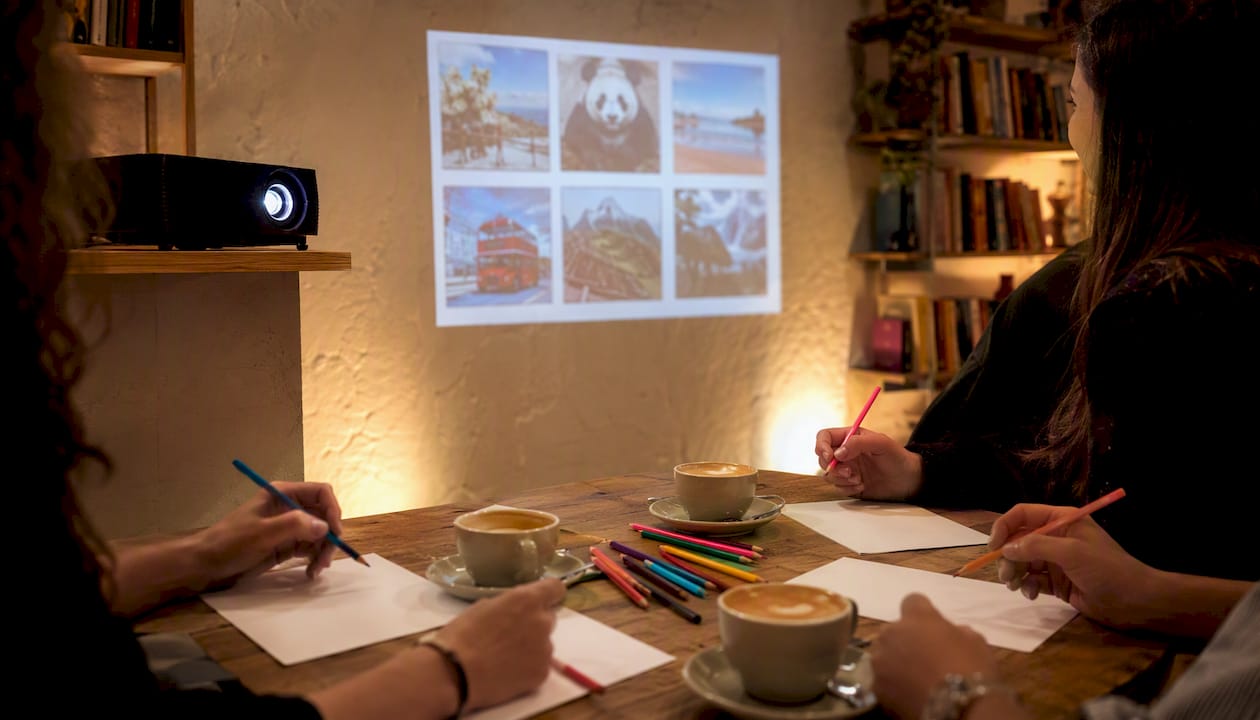
Small format changes matter more than people expect. Swapping one written round for a "guess the sound" round consistently perks a room back up, and a well-placed true-or-false question after three multiple-choice ones breaks the pattern-matching players start to rely on. For mixed-age or mixed-background groups, trim slang and region-specific references before the questions leave your notes, not mid-quiz when you notice blank stares.
Run Your Quiz Live With Real-Time Scoring
Printed question sheets work fine for a living room game night, but they fall apart the moment your group is spread across different cities or you want to see how your answers stack up against everyone else's in real time. Statiso's quiz tools let you drop a prepared round straight into a live format with instant scoring, no manual tallying, no shouting across a Zoom call to confirm who got what right.
What makes it worth the switch is the segmented results: you can see how your group's answers compare by age, location, or other factors, the same anonymized breakdown Statiso uses across its polls. That turns a simple trivia night into something closer to a live experiment in what people actually know. Pick a round from this bank, load it into Statiso, and see your group's real-time leaderboard update as each answer comes in.
Frequently Asked Questions
How many questions should a general knowledge quiz have? Most successful quizzes run 40 to 60 questions across five or six rounds, roughly 8 to 10 questions per round. That gives enough variety without exhausting players before the finale.
What's the best mix of easy, medium, and hard questions? A 4-4-2 split per 10-question round, four Easy, four Medium, two Hard, keeps the game accessible while still rewarding sharper players in the final stretch.
How do I make quiz questions fair for kids and adults in the same group? Drop the Hard tier for family games, lean on Easy and Medium questions, and swap in picture or sound-based rounds since they rely less on reading comprehension and more on recognition.
Should I use multiple choice or open-ended questions? Both. Multiple-choice questions keep hesitant players engaged since they at least have options to consider, while open-ended questions reward players with genuinely deep knowledge. Mixing the two, as recommended in Bored Panda's mixed-format approach, balances the room.
How often should I update trivia questions to stay accurate? Check sports records, political office holders, and award winners every few months at minimum, and always in the week before a live event. Stable facts, geography, historical dates, basic science, rarely need rechecking more than once a year.